
Capture the billing context at booking
An invoice query often begins with something that was left unclear when the booking was taken. Which company is paying? Which branch or cost centre should receive the charge? Was the trip covered by an agreed rate card, or was a separate price approved?
Confirm these details while the request is fresh. Keep the passenger, reporting time and route alongside the billing company, applicable contract and approval reference. When operations and accounts work from the same booking, fewer decisions have to be reconstructed at month-end.
Make changes visible as the duty progresses
Corporate trips change. A meeting runs late, another stop is added, or a different vehicle is needed. Record the operational change and any pricing or approval implications in the same workflow. A revised plan needs more than a message that only one person has seen.
Keep the assignment history and actual duty details available to the team reviewing the bill. If an exception needs an approval, resolve it before it becomes a disputed charge. A clear reason attached to the change is often more useful than a long email thread later.
Review the duty before building the invoice
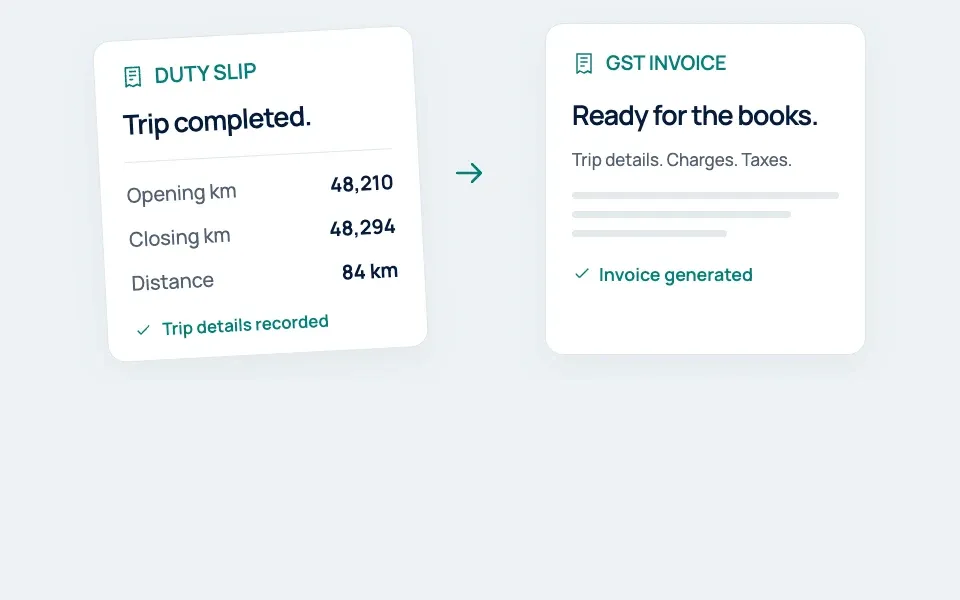
Check the start and end details, distance readings, waiting time and supporting expenses before selecting a duty for billing. Make sure missing evidence has an owner. A completed trip status alone does not tell accounts whether every charge is ready to issue.
Where a customer expects a duty slip or another supporting document, keep it linked to the trip. Review corrections at this stage so the invoice and its attachments tell the same story. This also gives your team a clear place to answer a customer’s question about a particular duty.
Keep a deliberate review before issuing
A draft invoice is a chance to check the company details, included duties, rates, adjustments, tax configuration and total. Have the appropriate person review it before issuance. Do not let an urgent dispatch request quietly become the only approval for a billing change.
CabNexus includes corporate booking, contract and rate-card records, supporting evidence, invoice validation and verification stages, and payment records. Those stages help a team organise its review. The business still needs to configure and check its own tax treatment with its adviser.
Finish the job with payment visibility
Issuing the invoice is one milestone. Record the payment against the relevant invoice and keep the outstanding balance visible. If a receipt covers several invoices, make the allocation clear so the next person reviewing the account can follow it.
A connected booking-to-invoice workflow gives operations and accounts a shared record of the work. Start with clean booking details, preserve changes, review the duty and close the payment loop. The result is a process people can explain when the customer calls.